League Secretary
4.8 195.00 Reviews
Analysis By AppCompare
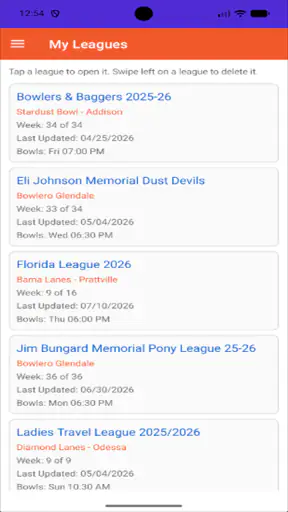
Running a bowling league usually means handling far more than scores. There are schedules to keep straight, standings to update, payments or fees to remember, and questions from bowlers who want a quick answer before the next frame. League Secretary is built around that administrative side of bowling, and I found its main appeal in putting league information into one focused place instead of scattering it across notebooks, spreadsheets, messages, and several unrelated apps.
That focus matters because this is not a bowling game and it is not trying to replace a general sports network. It is a free sports app from NABSO, LLC, aimed at people involved in organized bowling leagues. I would look at it first if I were a league secretary, treasurer, captain, or regular bowler who needs dependable access to league details. I would be less interested if I only wanted casual score tracking or a way to find open lanes.
What I considered before recommending it
My first decision criterion was simple: does the app reduce the amount of repeated league administration? A useful league tool should make everyday information easier to find, not create another place that someone has to maintain without a clear benefit. League Secretary makes sense when a group already has recurring league business and wants members to consult the same source.
The second criterion is who controls the information. A secretary or organizer needs more than a bowler who checks a schedule once in a while. The app is most valuable when someone is responsible for keeping league data current and the rest of the group needs convenient access to it. That distinction is important: an app cannot rescue a league from poor record keeping if nobody takes responsibility for updates.
I also considered how well it fits different kinds of users. A casual bowler may prefer a simple scorekeeping tool with no league administration around it. A competitive league participant, on the other hand, may appreciate having league information available without asking another person every time. The app’s usefulness grows with the amount of organized information a league handles.
There is also a practical platform question. The current version is 6.2.3, and it supports devices running Android 6.0 or later. That gives it a broad reach among Android users, although anyone bringing an older phone back into service should check compatibility before planning around it. The content rating is Everyone, which fits an app centered on ordinary league organization rather than mature entertainment.
A realistic league-night workflow
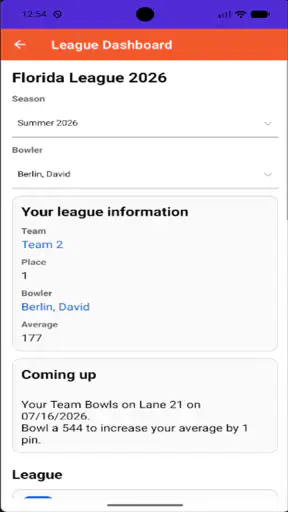
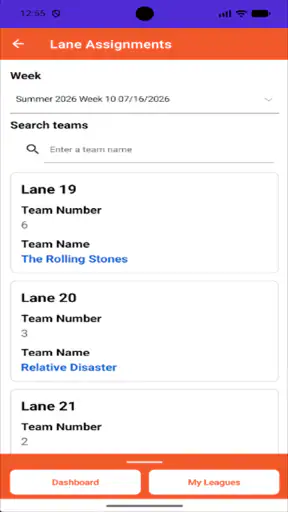
Imagine arriving at the bowling center and realizing you cannot remember whether your team is scheduled on the usual pair of lanes, whether a substitute has been recorded, or how your team sits in the standings. Instead of sending several messages to a captain or secretary, you open the app and look for the relevant league information. That is the kind of small interruption it can remove.
For the secretary, the benefit is more cumulative. After league night, the person responsible can use the app as the central place for the information that bowlers repeatedly request. The real gain is not one dramatic feature; it is avoiding the same answers being typed into separate group chats, written on paper, and copied into a spreadsheet.
I would still establish a routine before relying on it. Decide who is responsible for updates, when information is checked, and where unusual corrections are recorded. That workflow advice may sound basic, but it prevents a common problem with any shared sports app: members assume the information is current simply because it appears in an app.
Where the focused design wins
The strongest point is specialization. League Secretary is not trying to be a broad social platform, a training coach, or an arcade-style bowling game. Its purpose is tied to league data, so the app is easier to evaluate: if your bowling life revolves around organized league information, its narrow scope is an advantage rather than a weakness.
I also like the idea of separating league administration from personal bowling tools. A scorekeeping app may be excellent for recording an individual practice session, but that does not automatically make it suitable for managing a group. Likewise, a messaging app can distribute announcements but is awkward as a long-term reference because important details disappear into conversation.
That is where this app can win against familiar alternatives. A spreadsheet offers flexibility, but it often depends on one person knowing how the file works and remembering to share the latest version. Paper records are easy to start but inconvenient when someone needs information away from the desk. Group chats are fast for announcements but poor at preserving a clean history. League Secretary sits closer to a dedicated reference point for the league.
The practical advantage is consistency, not spectacle. People who expect a flashy bowling experience may find it plain, but organizers often value a tool that stays centered on the information they need. I would recommend judging it by the number of repeated questions and manual updates it removes, rather than by whether it feels entertaining.
Useful habits that make it more effective
One non-obvious advantage of a dedicated league app is that it can change how members ask for information. Instead of treating the secretary as a live search service, bowlers can first check the shared league source. That only works if the league presents the app as the normal first stop and keeps its information organized.
A second useful approach is to use it before, during, and after league night for different reasons. Before bowling, members can check the information they need to prepare. During the session, captains can use it as a reference rather than relying on memory. Afterward, the secretary can make the next update part of the regular closing routine. Separating those moments makes adoption easier than asking everyone to learn the entire app at once.
A third insight is that the app should be treated as a communication aid, not as permission to stop communicating. If a schedule changes at short notice or a correction affects several teams, I would still announce it directly and then make sure the central record matches. The app can reduce confusion, but it does not replace judgment about urgent messages.
For a league with several people sharing administrative duties, I would also agree on a single naming and update convention. Even without adding extra tools, consistent wording makes information easier to scan. The more people edit or report league details, the more important that shared habit becomes.
Where another category may fit better
League Secretary is not the right choice for every bowler. If your main goal is improving release technique, tracking practice sessions, or analyzing personal performance, a training-oriented bowling app may be a better match. Those tools are designed around the individual athlete, while this one is about the league’s shared information.
It may also be unnecessary for a very small informal group that only bowls occasionally and already agrees on everything through conversation. Adding a dedicated administrative app to a group with almost no recurring administration could create more setup work than value. In that situation, a simple message thread may genuinely be enough.
At the other extreme, a large organization with complicated accounting, multiple divisions, extensive member records, or broader club management needs may require a more comprehensive system. A general database or league-management platform can be preferable when customization and detailed reporting matter more than simplicity. I would not choose League Secretary solely because it is specialized if the league has outgrown a focused tool.
The comparison with spreadsheets is especially nuanced. A spreadsheet is harder for casual members to navigate, but it can be better for an experienced administrator who needs custom formulas or unusual reports. The app is more appealing when accessibility for ordinary bowlers matters and the league wants a common destination. The spreadsheet remains stronger when the secretary needs complete control over a highly personalized data model.
The cost of changing the league’s routine
The financial barrier is low because the app is free. That makes experimentation easier: a secretary can consider it without asking the league to approve a software budget. Still, free does not mean effortless. The real cost is behavioral. Members must know where to look, organizers must keep information current, and anyone accustomed to paper or chat messages must change habits.
I would introduce it gradually rather than moving every record at once. Start with the information members ask for most often, explain the new routine clearly, and keep a temporary backup while people learn it. This reduces the risk of a league night being disrupted by a rushed transition.
Before switching, I would ask three practical questions. Who will maintain the information? What does the league consider the authoritative version when an old message conflicts with the app? And how will urgent changes be announced? These questions are more important than the download itself because they determine whether the app becomes useful or simply becomes another neglected channel.
There is also a social cost to consider. Some bowlers may be comfortable with paper records or may not want to install another app. A good rollout should allow those members to get essential information without making them feel excluded, while still encouraging regular users to consult the shared source. The app works best when it simplifies the league for most people without turning access into a source of friction.
What the adoption numbers suggest
The app has passed 50 thousand installs, with an average rating of 4.8 from around 750 ratings and close to 200 written reviews. I treat those figures as encouraging evidence that it is solving a real problem for a meaningful group of users, especially because league administration is a specific niche rather than a universal phone task.
Those numbers should not be read as a guarantee that every league will fit it perfectly. A high average can show that the core audience values the app while still leaving room for a mismatch with leagues that need advanced customization or with bowlers who want personal training features. I would use the positive reception as a reason to test it, not as a substitute for checking your league’s workflow.
Privacy, access, and everyday practicality
Because this is a league-information app, I would think carefully about what your group expects to keep accessible and who should be responsible for maintaining it. The secretary should make sure members know how the league uses the app and should avoid treating convenience as an excuse for careless handling of personal details.
For ordinary bowlers, the key practical question is whether the app saves time compared with asking a captain or searching old messages. If the answer is yes, it earns its place quickly. If members still need to contact the secretary for every detail, the league may need a better update routine rather than a different app.
I would also keep a simple fallback for important league-night information. Phones can be unavailable, accounts can be misplaced, and people can forget to check an update. A backup does not undermine the app; it acknowledges that organized sports happen in real places, with interruptions and last-minute changes.
My recommendation for different bowlers
I recommend League Secretary most strongly to league secretaries and organizers who want one focused home for bowling league information. It is also worth trying for team captains and regular members who are tired of chasing schedules, standings, or other recurring details through scattered channels.
I would recommend it with more caution to a casual bowler. If you bowl socially and do not participate in an organized league, the app’s central purpose may not justify installing it. A personal score tracker or a general bowling companion would likely be a better fit for that use case.
I would also pause before choosing it for a league that needs elaborate custom reporting, deep financial management, or a complete club-management system. In that situation, a broader platform may justify its extra complexity. League Secretary is most convincing when the league needs clarity and shared access without turning administration into a large technical project.
For me, the deciding factor is the gap between the current method and the desired routine. If your league already relies on a secretary answering the same questions repeatedly, this app has a clear job to do. If your records are already organized in a way everyone can access and understand, the improvement may be modest.
League Secretary is a free Android sports app from NABSO, LLC, released on June 22, 2022, and its continued presence through version 6.2.3 suggests a product intended for ongoing league use. I would start with a small trial, assign responsibility for keeping information current, and ask members whether it actually reduces confusion after a few league nights.
My final view is positive but deliberately practical: choose it for organized bowling administration, not for general bowling entertainment. When the problem is scattered league information, its focused approach can be more useful than a flexible but messy spreadsheet or a fast but forgetful chat thread. When the problem is personal skill development or highly customized club management, another category will serve you better.
FAQ
What is League Secretary, and what can I use it for?
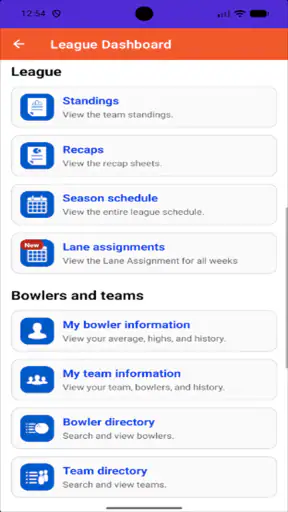
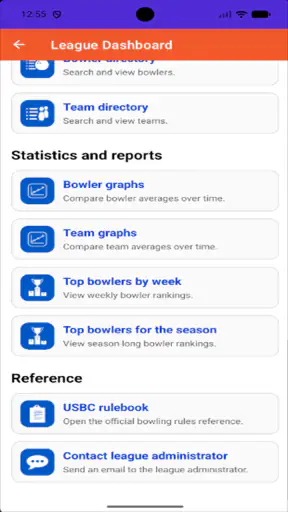
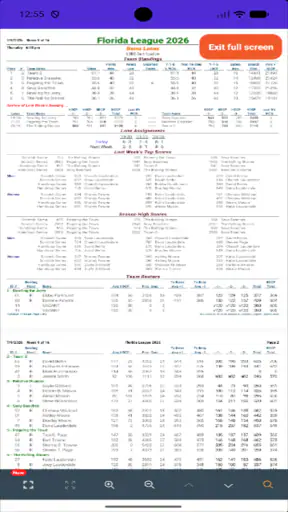
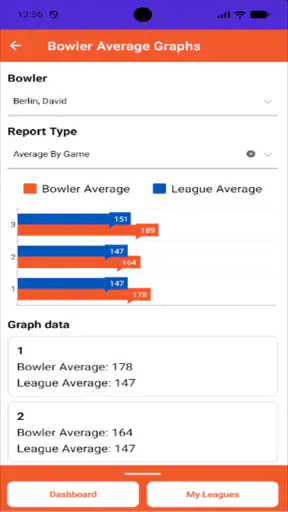
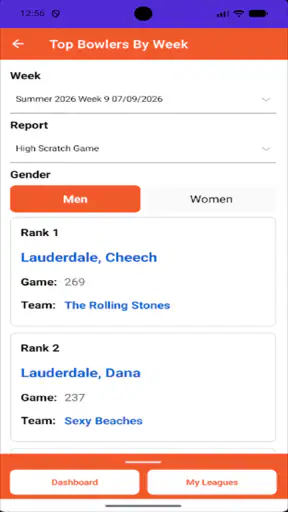
League Secretary is a sports league management app designed to help players, teams, coaches, and organizers keep track of league information in one place. Depending on the league’s setup, you may be able to view schedules, standings, scores, rosters, team details, player statistics, announcements, and venue information. Its usefulness depends on whether your specific league or organization actively uses the platform.
Do I need an account to use League Secretary?
You may be able to browse certain public league information without creating an account, such as schedules, standings, scores, or team pages. However, an account or league-specific access may be required for features involving private rosters, player profiles, team administration, score reporting, or notifications. Access rules can vary between leagues, so your organizer may need to invite you or provide the correct league details.
Can League Secretary manage schedules, scores, and standings?
Yes, League Secretary is primarily useful for organizing and following competitive league activity. Users can generally check upcoming games, results, standings, and other competition details when the league administrator has entered and published the information. Keep in mind that the app does not automatically know every result or schedule change; accuracy and update speed depend on the league officials responsible for maintaining the data.
Is League Secretary suitable for both players and league administrators?
The app can be useful for both audiences, but the available tools may differ according to your role. Players and spectators typically use it to follow fixtures, results, rankings, teams, and statistics. Administrators may have additional functions for maintaining league records, entering scores, managing teams, and publishing updates. Before downloading, check whether your organization uses League Secretary and what permissions your role provides.
Does League Secretary work for every sport or league format?
League Secretary supports organized leagues across different sports and competition types, but the exact features depend on how each league is configured. Some sports may have specialized statistics, divisions, or scheduling options, while others may use only basic standings and results. It is best to search for your league within the app or confirm compatibility with the organizer before relying on it for registration or official competition information.
Pros
- Simplifies league administration from one central dashboard.
- Keeps fixtures
- results
- and standings organized and accessible.
- Helps reduce manual paperwork and scheduling mistakes.
- Useful for sharing updates with players and team officials.
- Supports quick access to essential league information on mobile.
Cons
- May take time to configure leagues and teams initially.
- Some features may depend on the league’s chosen setup.
- Users may need administrator access for full functionality.
- Notifications can become overwhelming for active competitions.
- Interface may feel complex for users unfamiliar with league software.